Is Scorpio lagna at a disadvantage?

Is it desirable to be born in one lagna over another? This is a tough question and, yes, there are successful and unsuccessful individuals in all lagnas. However, does having a particular lagna increase or decrease the probability of success?

To analyze this question we will look at a few dimensions and evaluate each lagna to see if there is an inherent bias.

  1. Kala Purusha – The natural zodiac or “kala purusha” starts with Aries and ends in Pisces. Kendra (1,4,7,10) and Trikona (5,9) houses are always considered good and dusthana (3,6,8,12) houses are considered bad. For this exercise we will consider houses 2 and 11 neutral. So, we can say lagnas that are good in “kala purusha” are good for the individual and lagnas that are bad in “kala purusha” are difficult for the individual. This dimension puts Gemini, Virgo, Scorpio, and Pisces at a disadvantage. Taurus and Aquarius are neutral. The rest benefit from this dimension.
  2. Natural nature of lagnesh – In evaluating the lagna, the lord of the lagna (lagnesh) is very important. In this dimension we consider it a benefit if the lagnesh is a natural benefic and a disadvantage if the lagnesh is a natural malefic. We take Jupiter, Venus, Mercury, and Moon as natural benefics. So, Taurus, Gemini, Cancer, Virgo, Libra, Sagittarius, and Pisces benefit from this dimension. Aries, Leo, Scorpio, Capricorn, and Aquarius are at a disadvantage.
  3. Functional nature of lagnesh – The lagnesh is a functional benefic if it only owns good houses (1,4,5,7,9,10) – meaning, it does not own a bad houses (3,6,8,12). Gemini (1,4), Virgo (1,10), Sagittarius (1,4), and Pisces (1,10) benefit from this because the lagnesh for these rasis only own kendra houses. Cancer and Leo, also, benefit because the lagnesh does not own a bad house. Capricorn is neutral because its lagnesh, Saturn, owns the first and second houses. The other rasis, Aries (1,8), Taurus (1,6), Libra (1,8), Scorpio (1,6), and Aquarius (1,12) are at a disadvantage.
  4. Yoga karaka – A yoga karaka is a graha that owns a kendra (1,4,7,10) and a trikona (5,9) house. This is a clear example of biases in lagnas. Not all lagnas have a yoga karaka. The yoga karaka, all other factors being equal, can help the individual achieve success. For Taurus and Libra lagna, Saturn is the yoga karaka owning 9,10 and 4,5 houses respectively. So, Saturn is beneficial to these lagnas. Mars is the yoga karaka for Cancer (5,10) and Leo (4,9). Venus is the yoga karaka for Capricorn (5,10) and Aquarius (4,9). The rest of the lagnas Aries, Gemini, Virgo, Scorpio, Sagittarius, and Pisces do not have a yoga karaka.
  5. Dasa length of lagnesh – the timing of events and the fructification of results are determined by the cycle of the grahas in Vimshottari dasa system. Venus has a twenty year cycle. While, Sun has a six year cycle. So, if the lagnesh is strongly placed we get benefit for twenty years in the case of Taurus and Libra, but only six years in the case of Leo. This also seems to suggest a bias towards some lagnas. The longer dasa cycles are those of Jupiter (16 years), Mercury (17 years), Saturn (19 years), and Venus (20 years). The shorter dasa cycles are those of Sun (6 years) and Mars (7 years). Moon, at 10 years, is in between. This dimension benefits Taurus, Gemini, Virgo, Libra, Sagittarius, Capricorn, Aquarius, and Pisces. This dimension puts Aries, Leo, and Scorpio at a disadvantage and Cancer is neutral.

Putting the above dimensions in a table we get

Rasi/lagna Kala Purusha Natural Benefic Functional Benefic Yoga Karaka Dasa Length Total
Aries -3
Taurus 2
Gemini 1
Cancer 4
Leo 1
Virgo 1
Libra 3
Scorpio -5
Sagittarius 3
Capricorn 2
Aquarius 0
Pisces 1

Total is calculated by giving one point to “green”, minus one to “red”, and zero to “grey”.

Clearly, Cancer lagna benefits the most. Cancer also has the added advantage that its lagnesh, the Moon, has no enemies. Typically, a planet sitting in an enemy’s house weakens in strength. In the case of Cancerians, the Moon is never weakened because of this factor. Individuals born in Cancer lagna can consider themselves lucky!

Scorpio is the most disadvantaged. Scorpio is, also, the only rasi where two graha’s (Moon and Rahu) are debilitated. Scorpio is a tough lagna, but it is also the lagna with the most mystical powers and which is best suited for astrology!


How to analyze yogas in vedic astrology?

How to analyze yogas

Every vedic chart will have many yogas. However, most lives are average at best. How do you account for this contradiction? How to you analyze yogas?

Let us take the Budha-Aditya yoga, for example. It forms when Sun and Mercury are conjunct in a rasi. A person with Budha-Aditya yoga will be very intelligent. Given a Sun’s rasi, Mercury can only be in three rasis – the rasi before the Sun, the rasi the Sun is in, or the rasi after the Sun. So, Mercury can only be in 3 rasis for any given position of the Sun. So, the probability of having a Budha-Aditya yoga in a vedic chart is 1/3. If everyone with Budha-Aditya yoga were to be intelligent, one-third of the world population would be intelligent!

Clearly not all Budha-Aditya yogas are equal. So, how to do analyze the strength of the yoga?

There are factors that strengthen a yoga and factors that weaken a yoga.

Factors strengthening a yoga

  1. Grahas involved in the yoga are strong – Grahas in the sign of exaltation, in their moolatrikona or own house, have dig bala… If two grahas are involved in the yoga and both are strong, this is better than just one of the grahas being strong.
  2. Yoga forms in a positive house. The first house is the best because it is a kendra and a trikona, followed by the other kendras (4,7,10) and trikonas (5,9), followed by the 2nd and 11th house, followed by 3rd house.
  3. Grahas are aspected by benefic planets. Aspect from Jupiter, Venus, Mercury, Waxing Moon in that order strengthen the yoga.
  4. The house the yoga forms in is surrounded by benefic grahas – subha-kartari yoga of the yoga house.
  5. The yoga repeats from the three lagnas – when seen from the Ascendent, from the Sun, and from the Moon.
  6. Grahas participate in other positive yogas.
  7. The chart has a full moon – full moon enhances all the yogas in a chart.

Factors weakening a yoga

  1. Grahas involved are weak – grahas are debilitated, combust, or in a planetary war.
  2. Yoga is formed in a negative house. The trik houses (6,8,12) are negative houses.
  3. Grahas are aspected by malefic planets. Aspects from Saturn, Mars, Rahu/Ketu, Sun in that order weaken the yoga.
  4. The house the yoga is formed in is surrounded by malefic grahas – papa-kartari yoga of the yoga house.
  5. Grahas participate in other negative yogas.
  6. The chart has a new moon – new moon diminishes all the yogas in a chart.

No one will have all the strengthening factors and none of the weakening factors. Typically, you have a mix of strengths and weaknesses in a vedic chart. The more strengths the yoga has the more powerful the yoga.

Also, the more the significance of the house the yoga is formed in, is tied to the result of the yoga, the better it is for the yoga. In the case of Budha-Aditya yoga, because its result is intelligence, having it tied to the first or fifth house causes more synergy.

Finally, there is the concept of timing. A yoga will be most powerful when the person runs the dasa-bhukti of the grahas involved in the yoga. In the case of Budha-Aditya yoga, the yoga will show its full potential during Sun-Mercury or Mercury-Sun dasa-bhukti.

Here are the charts of Nikola Tesla, Charles Darwin, Louis Pasteur, Sir Issac Newton, and Albert Einstein. All-time great scientists who have Budha-Aditya yoga.

For example: Nikola Tesla

how to analyze yogas

Positives: Mercury is in its own house; yoga is formed in the 4th house; Venus is conjunct with Mercury and Sun; Mercury forms Bhadra yoga (pancha-mahapurusha yoga); yoga from the Moon is in the 10th house.

Negatives: Saturn is conjunct with Sun and Mercury.

Overall very positive Budha-Aditya yoga driven by Mercury.

For example: Charles Darwin

how to analyze yogas

Positives: Yoga is formed in 4th house; flanked by Jupiter, Venus, and Moon (Shuba-kartari yoga); from Moon in 2nd house.

Negatives: None

For example: Louis Pasteur

Positives: Conjunct with Venus; from Moon Dharma-Karmadhipati yoga (lord of 4th and 5th house); fullish Moon; connected with the 1st house because of conjoint Venus.

Negatives: None

For example: Sir Issac Newton

Positives: Full Moon; Moon aspecting Me/Su; from Moon in 7th house

Negatives: Aspected by Saturn

For example: Albert Einstein

Positives: Sun has dig bala; yoga in 10th house; from Moon yoga in 5th house; conjunct with exalted Venus; Neecha-bhanga raja yoga by Venus canceling debilitated Mercury; connected with the first house because of Mercury.

Negatives: Mercury is in its sign of debilitation; conjunct Saturn.

Clearly, you can see there are differences in the strength of Budha-Aditya yoga in these famous scientists” charts. Nikola Tesla’s Budha-Aditya yoga appears to be the strongest.

2018 Best year for Aquarius

2018 best year for Aquarius

2018 is the best year for Aquarius or Kumbha Moon sign.

Dasha vs Transits

Vedic astrology uses dasas and transits to determine good and bad periods in a person’s life. In the dasa system we look at grahas at three levels – maha dasa, antar dasa, and pratyantar dasa. Among these, the graha running the maha dasa is the most important. The dasa analysis is done from the individual’s lagna or ascendant. In transits we mainly look at the transits of Saturn, Rahu/Ketu, and Jupiter. Transit analysis is done from the Moon sign.

To create a mathematical model, we can give the following weights to each of these grahas

  • 30% – maha dasa graha
  • 20% – antar dasa graha
  • 10% – pratyantar dasa graha
  • Saturn transit – 10%
  • Jupiter transit – 10%
  • Rahu/Ketu transit – 10%
  • Transits of the other grahas or transit of the maha dasa graha – 10%

So, transits can account for 30 – 40% of the influence on a person.

Transits in 2017 to 2018

2017 is an eventful year for graha transits. Jupiter, Saturn, and Rahu/Ketu are the slow moving grahas. All three have transits in 2017. From 26 October 2017 to 11 September 2018, these grahas are in the following rasis.

GrahaTransit To RasiTransit Start DateTransit End DatePositive Houses
RahuCancer/Kataka18 AUG 201707 MAR 20193,6,10,11
JupiterLibra/Tula12 SEP 201711 SEP 20182,5,7,9,11
SaturnScorpio/Vrischika26 OCT 201724 JAN 20203,6,11

Aquarius/Khumba, is the only moon rasi for which Rahu, Jupiter, and Saturn transit is good.  Therefore, those born with their moon in Aquarius/Khumba can expect a very successful 2018.

It is very rare for all three transits to benefit one moon sign. This could be a once in a lifetime opportunity for my friends with Khumba rasi. So, hope you take full advantage of 2018 being the best year for Aquarius or Kumbha Moon signs.

Upanishads Teachers, Students and Questions

The Upanishads follow a standard pattern. They have a teacher, a student, and the student’s questions. We will explore the Upanishads, teachers, students, and questions for the most important Upanishads.

parts_of_vedas

The Vedas are broken into four parts. Samhitas are the collection of mantras or hymns. Brahmanas explain how to use the mantras in rituals. Aranyakas delve upon the meaning of the mantras and rituals. Finally, the last part, the Upanishads focus on contemplation of the philosophy behind the scriptures. The last part is the “Vedangas” or the Upanishads.

Upanishads form the core of Hindu philosophy. Etymologically, the Sanskrit term breaks down into “u” (at), “pa” (foot), and “nishat” (sitting down). Literally translating to a student sitting down near the teacher while receiving spiritual knowledge.

All Upanishads have the following format – A student goes to a teacher seeking answers to a question. The teacher’s response and dialogue with the student is the content of the Upanishads.

guru_shishya

The table below shows the Upanishads, teachers, students, and questions. The Upanishads considered are Isa, Kena, Katha, Prasna, Mundaka, Mandukya, Taittiriya, Aitareya, Chandogya. and Brahadaranyaka. These ten Upanishads are the most important because Sri Adi Sankara wrote commentaries on each of them. The general purport of the questions is to understand the nature of the Universe, understand the nature of the self, and understand the relationship between the Universe and the self.

Advaitic Vendata focuses heavily on understanding the relationship between the Universe and the self.

Upanishads teachers students and questions

Shiva Manasa Puja (Mental prayer to lord Shiva)

Puja (prayer) is often cited as the first step in one’s spiritual journey. Adi Sankara understood in the 8th century AD that people’s life was becoming very hectic. They did not have the time to perform the rituals associated with puja in Hinduism. Therefore, he composed “Shiva Manasa Puja” to give everyone a way to mentally perform puja for Lord Shiva.  It is one of my favorite Adi Sankara compositions and I mentally chant it every morning.

Verse 1: Abhishekam, Alangaram and Deeparadhanai

Ratnaih Kalpitam-Aasanam Hima-Jalaih Snaanam Ca Divya-Ambaram
Naanaa-Ratna-Vibhuussitam Mrga-Madaa-Moda-Angkitam Candanam
Jaatii-Campaka-Bilva-Patra-Racitam Pushpam Ca Dhuupam Tathaa
Diipam Deva Dayaa-Nidhe Pashupate Hrt-Kalpitam Grhyataam

Visualize seating Lord Shiva on a throne of gems and bathing him with waters from the Himalayas. Then apply sandal paste and dress him up in divine clothes studded with gems. Once dressed, offer flowers in the form of jasmine and magnolia and offer Shiva’s favorite Bilva leaves. Then follow this by lighting a lamp and burning fragrant incense sticks.

Verse 2: Prasadam and Naivedyam

Shiva_Manasa_Puja_Verse_2

Sauvarnne Nava-Ratna-Khanndda-Racite Paatre Ghrtam Paayasam
Bhakssyam Pan.ca-Vidham Payo-Dadhi-Yutam Rambhaa-Phalam Paanakam
Shaakaanaam-Ayutam Jalam Rucikaram Karpuura-Khannddo[a-U]jjvalam
Taambuulam Manasaa Mayaa Viracitam Bhaktyaa Prabho Sviikuru

Visualize preparing a luxurious meal for Lord Shiva starting with pyasam served in a bowl studded with gems. Then follow that with a five-course meal incorporating Lord Shiva’s favorite ingredients milk, curd, and bananas. After that, offer a drink made of the sweetest fruits and vegetables. All of which, you offer on a grand plate and light camphor to stimulate the appetite of the Lord.

Verse 3: Bhakthi and Namaskaram

Shiva_Manasa_Puja_Verse_3

Chatram Caamarayor-Yugam Vyajanakam Ca-Adarshakam Nirmalam
Viinnaa-Bheri-Mrdangga-Kaahala-Kalaa Giitam Ca Nrtyam Tathaa
Saassttaanggam Prannatih Stutir-Bahu-Vidhaa Hye[i-E]tat-Samastam Mayaa
Sangkalpena Samarpitam Tava Vibho Bhaktya Prabho Swekaro

Visualize preparing his bed under a cool canopy and fanning him using a hand fan. Provide dance and music in the form of Veena and drums to further relax the Lord. You finally sing prayers to the Lord and prostrate before the Lord asking him to accept your mental prayers.

Verse 4: Internalize the concept of god

Shiva_Manasa_Puja_Verse_4

Aatmaa Tvam Girijaa Matih Sahacaraah Praannaah Shariiram Grham
Puujaa Te Vissayo[a-U]pabhoga-Racanaa Nidraa Samaadhi-Sthitih
San.caarah Padayoh Pradakssinna-Vidhih Stotraanni Sarvaa Giro
Yad-Yat-Karma Karomi Tat-Tad-Akhilam Shambho Tava-Araadhanam

Visualize your entire body as a temple for Lord Shiva, with your soul being Lord Shiva, your intellect being Goddess Parvati, and your breadth being the attendants of Lord Shiva. Then dedicate all your actions to Lord Shiva by considering every worldly interaction a prayer to the Lord, by thinking of sleep as being in a state of deep meditation, by dedicating every step taken toward the act of going around the Lord, by thinking of every word uttered as a hymn in the praise of the Lord, and by dedicating every task as a task of worship to the Lord.

Verse 5: Surrender and Forgiveness

Shiva_Manasa_Puja_Verse_5

Kara-Caranna-Krtam Vaak-Kaaya-Jam Karma-Jam Vaa
Shravanna-Nayana-Jam Vaa Maanasam Va-Aparaadham
Vihitam-Avihitam Vaa Sarvam-Etat-Kssamasva
Jaya Jaya Karunna-Abdhe Shrii-Mahaadeva Shambho

Finally, you humbly ask for forgiveness for any sins you committed. These could be by your hands and feet or your words. The sins could also be witnessed by your eyes or heard by your ears. Finally, the sins could be committed by your mind. In conclusion, you salute the greatness of Lord Shiva.

Simple Hindu Prayers

It is good to carve out some time every day for some simple Hindu prayers. The idea is to find ways to reduce the amount of time the mind spends on mundane thoughts. Prayers are mentioned as a good first step towards self realization in the Upadesa Saram by Sri. Ramana Maharishi. He goes on to say that japas and meditation are even better; but prayers are a good first step.

In this post I have selected nine simple Hindu prayers that everyone can say every day. The first three prayers are for Shiva, Vishnu, and Brahma; the trinity in Hinduism. The next three are for their consorts Parvati, Lakshmi, and Saraswati. These are followed by a prayer for Ganesha and Hanuman and finally capped off with a Shanti Mantra.

simple hindu prayers
Shiva
Om Tryambakam Yajamahe
Sugandhim Pushtivardhanam
Urvarukamiva Bandhanan
Mrityor Mukshiya Maamritat
 
simple hindu prayers
Vishnu
Shuklambaradaram Vishnum
Shashivarnam Chaturbhujam
Prasanna vadanam Dhyaayeth
Sarva vighno pashantaye
Brahma
Brahma
Gurur Brahma Gurur Vishnu
Gurur Devo Maheshwara
Gurur Sakshat Parabrahma
Tasmai Shree Guruvey Namaha
simple hindu prayers
Parvati
Sarva Mangala Mangalye
Shive Sarvartha Sadhike
Sharanye Tryambake Gauri
Narayani Namostute
Lakshmi
Lakshmi
Karaagre Vasate Lakssmih
Karamadhye Sarasvati
Karamuule Tu Govindah
Prabhaate Karadarshanam
Saraswati
Saraswati
Saraswati Namastubhyam
Varade Kaama Roopini
Vidyaa Rambham Karishyaami
siddhir Bhavatu Me Sadaa
Ganesha
Ganesha
Ekadantam Mahaakaayam
Taptakaajnchana sannibham
LambodaraM VishaalaaxaM
Vande Ham GaNanaayakam
Hanuman
Hanuman
Buddhir Balam Yasho Dhairyam
Nir Bhayatvam Arogata
Ajatyam Vak Patutvam Cha
Hanumat Smaranat Bhavet
om
Peace
Om Saha Nau-Avatu Saha Nau Bhunaktu
Saha Viiryam Karavaavahai
Tejasvi Nau-Adhiitam-Astu Maa Vidvissaavahai
Om Shaantih Shaantih Shaantih

Animals and Birds in Hinduism

Animals and birds play a prominent role in Hinduism. For example, every god uses an animal as their mode of transportation. The vehicle and the god form an interdependence. The animal helps the god perform his or her duties more effectively. For example, the bull is Shiva’s “vahana”. The bull represents strength and therefore adds to Shiva’s strength. Vishnu is the protector. The eagle, his vehicle, helps him oversee the world with a sharp eye.

In addition, some animals and birds have special statuses in Hinduism. The elephant is worshiped as Ganesha. Similarly, the monkey is worshiped as Hanuman. Finally, snakes are worshiped as Nagas. Also, in the realm of birds, the eagle is worshiped as Garuda.

Animals revered as gods

animals and birds in hinduism

Elephant (Ganesha)
animals and birds in hinduism

Monkey (Hanuman)
animals and birds in hinduism

Snakes (Naga Deva)

Animals as mounts of gods

animals and birds in hinduism

Bull (Shiva – Destroyer)
Garuda

Eagle (Vishnu – Protector)
Swan

Swan (Brahma – Creator)
Lion

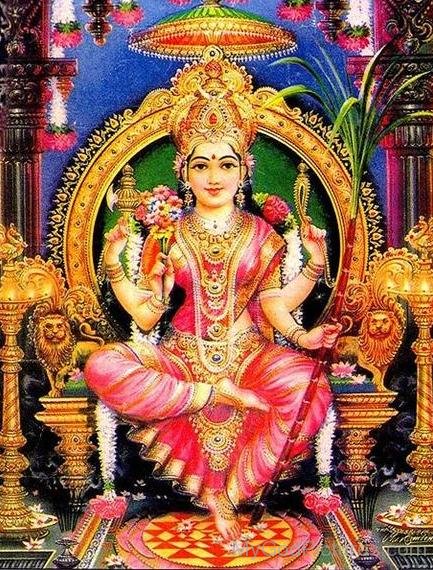
Lion (Parvati – Power)
animals and birds in hinduism

Owl (Lakshmi – Wealth)
Saraswati

Swan (Saraswati – Intelligence)
animals and birds in hinduism

Mouse (Ganesha – Remover of Obstacles)
Peacock

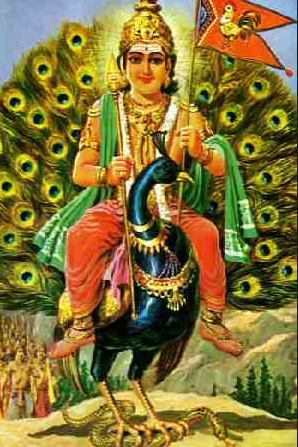
Peacock (Muruga – War)
Tiger

Tiger (Ayyapan)
Sun

Horse (Sun)
animals and birds in hinduism

Antelope (Moon)
animals and birds in hinduism

Lion (Mercury)
Shukran

Horse (Venus)
Mars

Ram (Mars)
animals and birds in hinduism

Elephant (Jupiter)
Crow

Crow (Saturn)
Lion_Rahu

Lion (Rahu)
Ketu

Eagle (Ketu)
elephant

Elephant (Indra – King of Gods)
Ram

Ram (Agni – Fire)
animals and birds in hinduism

Sea Dragon (Varuna – Water)
Antelope_Vayu

Antelope (Vayu – Wind)
Yama

Buffalo (Yama – Death)
parrot

Parrot (Kama – Love)

Even “Man” is depicted as a “vahana”. “Man” carries Kubera, the god of wealth!

animals and birds in hinduism
Man (Kubera – Money)

Nirvana Shatakam

Adi_Sankara

Nirvana Shatakam is a composition by Sri Adi Sankara. The back story is remarkable. When Sankara was 8 years, he set out to find a guru. At the banks of the Narmada river he met Guadapada how asked Sankara “Who are you”? Sankara responded with the six stanzas that make up Nirvana Shatakam. Guadapada accepted Sankara as his disciple.

Sri Adi Sankara is accepted by all to be a realized soul. So the answer to the question “who are you”, is the answer to the question “who or what is Atma”? Nirvana Shatakam expands on the definition of Atma given in the seventh verse of the Mandukya Upanishad. In similar style to that in Mandukya Upanishad, atma is defined by using negation. The verses state what Atma is not, but each verse concludes with a positive assertion of what Atma is. The composition is written in first person as if Atma is responding to the question “who am I”.

Verse 1: Who am I?
manobuddhyahaṅkāra cittāni nāhaṃ
na ca śrotrajihve na ca ghrāṇanetre
na ca vyoma bhūmir na tejo na vāyuḥ
cidānandarūpaḥ śivo’ham śivo’ham

I (Atma) am not the mind, intelligence, memory, or ego. I is also not the five sense organs of hearing, tasting, smelling, seeing, and touching. I am neither the five elements; sky, earth, fire, air, and water.
I am ever pure blissful consciousness!

Verse 2: Am I the body?
na ca prāṇasaṅjño na vai pañcavāyuḥ
na vā saptadhātur na vā pañcakośaḥ
na vākpāṇipādaṃ na copasthapāyu
cidānandarūpaḥ śivo’ham śivo’ham

I am not bodily systems like circulatory, respiratory, digestive, excretory… I am not the bodily components like plasma, blood, muscle, fat, bone… I am not the bodily types like gross, subtle, perpetual, conscious, and transcendental. I am not the bodily organs like hand, feet…
I am ever pure blissful consciousness!

Verse 3: What are my qualities and can I be achieved?
na me dveşarāgau na me lobhamohau
mado naiva me naiva mātsaryabhāvaḥ
na dharmo na cārtho na kāmo na mokşaḥ
cidānandarūpaḥ śivo’ham śivo’ham

I have no hatred, attachment, greed or infatuation. I have no pride, envy, or jealousy. I cannot be achieved by the four goals of life; righteousness, wealth, desire, and liberation.
I am ever pure blissful consciousness!

Verse 4: What are my actions?
na puṇyaṃ na pāpaṃ na saukhyaṃ na duhkhaṃ
na mantro na tīrthaṃ na vedā na yajña
ahaṃ bhojanaṃ naiva bhojyaṃ na bhoktā
cidānandarūpaḥ śivo’ham śivo’ham

I do not perform actions that create merits, sins, joy, or sorrow. I do not chant hymns, visit sacred places, read scriptures, or make sacrifices. I am not the enjoyer, enjoyed, or the experience of enjoyment.
I am ever pure blissful consciousness!

Verse 5: What is my state or relationship in society?
na me mṛtyuśaṅkā na me jātibhedaḥ
pitā naiva me naiva mātā na janmaḥ
na bandhur na mitraṃ gurunaiva śişyaḥ
cidānandarūpaḥ śivo’ham śivo’ham

I am neither born nor dead. I do not have a caste or any other distinctions. I am not a father or mother. I have no relations or friends. I am no one’s teacher and I have no disciples.
I am ever pure blissful consciousness!

Verse 6: How can I be described?
ahaṃ nirvikalpo nirākāra rūpo
vibhutvā ca sarvatra sarvendriyāṇaṃ
na cāsangata naiva muktir na meyaḥ
cidānandarūpaḥ śivo’ham śivo’ham

I have no form. I am changeless and have no variations. I am present everywhere and I the substratum of everything and am behind all sense organs. I am neither attached to anything nor am I free from anything
I am ever pure blissful consciousness!

Mandukya Upanishad Turiya Atma

Mandukya Upanishad Turiya Atma, asserts that our true nature, Atma, is the “Turiya” state. In this state there is no “Mind”. So, how do you describe a state that is beyond the Mind? This is the paradox that the Upanishad wants us to reflect on. The Mind imagines anything that we can imagine. The Mind conceptualizes any form, idea, or concept we may develop to understand Atma. The Upanishad, then, states that this form, idea, or concept is not the real Atma!

Although, seemingly counter intuitive at first, the process of self realization is not different from the process of seeking other worldly goals. Let us say that our goal is to become a famous scientist. The attributes of a famous scientist would be someone very knowledgeable and someone working in a prestigious research firm or University. Our plan would, then, include studying well as a student, doing a PhD in a prestigious school, and joining the research department of a innovative corporation or University. These are all actions that align with the ultimate goal. The attribute of the “Turiya” state is the lack of “Mind”. So, our actions should be to quieten our Minds and not surprisingly, the Mandukya Upanishad recommends meditation!

Verse 7 – Turiya Atma

As stated before, we cannot describe the “Turiya” state. We can however, through negation, describe everything that it is not. This seventh verse attempts a definition. This is probably the most important verse of the Upanishad.

nāntaḥ-prajñam, na bahiṣ prajñam, nobhayataḥ-prajñam,
na prajnañā-ghanam, na prajñam, nāprajñam;
adṛṣtam, avyavahārayam, agrāhyam, alakṣaṇam,
acintyam, avyapadeśyam, ekātma-pratyaya-sāram,
prapañcopaśamam, śāntam, śivam, advaitam,

Verse 7 Explained

The first two words negates every object in our dream and waking states. So, the ultimate reality is not any object we can construe in the waking or dream states. “nāntaḥ-prajñam”, negates the objects in the dream state and “na bahiṣ prajñam”, negates the external world of objects. For most people, when these two realms are negated there is nothing else left. The Upanishad, however, continues. The ultimate reality is not the “deep sleep” state (nobhayataḥ-prajñam). It is not a mass of consciousness (na prajnañā-ghanam), or simple consciousnesses (na prajñam), or insentience (nāprajñam). With this, the Upanishad negates the three planes of consciousness and the terms used in ordinary language to describe Atma.

The next set of words use verbs to describe Atma. Atma cannot be experienced by the sense organs. It cannot be seen (adṛṣtam), heard, smelt, touched, or tasted. Atma is not related (avyavahārayam) to anything. It is not comprehensible (agrāhyam). Atma cannot be inferred (alakṣaṇam). Finally, it is unthinkable (acintyam) and indescribable (avyapadeśyam).

A natural question at this point would be “Is Atma “nothing”?”. If Atma was truly “nothing”, the Upanishad could have just said so and moved on. Instead the Upanishad elaborately tries to describe Atma. The Upanishad provides some positive descriptions of Atma, thereby asserting that Atma is not nothingness! Atma is of the nature of Pure Consciousness (ekātma-pratyaya-sāram). It is peaceful (śāntam), all-blissful (śivam), and non-dual (advaitam).

Sri Adi Sankara in his composition “Niravana Shatakam” further elaborates upon “Mandukya Upanishad Turiya Atma”.

Part I – Summary

Part II – Life is but a dream!

Mandukya Upanishad states Life is but a dream!

Mandukya Upanishad states life is but a dream

Part I provides the summary of the Mandukya Upanishad. This part focuses on the fact that Mandukya Upanishad states life is but a dream.

Part II delves deeper into verses 3 and 4, describing the waking and dream states. Mandukya Upanishad asserts that waking state is as illusory or as real as the dream state.

Verse 3 – Waking StateVerse 4 – Dream State
Jagarita-sthano bahis-prajnah
saptanga ekona-vimsati-mukhah
sthula-bhuk vaisvanarah
prathama padah
Svapno-stano antah-prajnah
saptanga ekona-vimsati-mukhah
pravi-vikta-bhuk taijasa
dvitiyah padah
Waking state is conscious of the external world of objects
It has seven limbs and nineteen mouths
The experiencer of gross objects is called Vaisvanarah
This is the first quarter
Dream state is conscious of the internal world of objects
It has seven limbs and nineteen mouths
The experiencer of subtle objects is called Taijasa
This is the second quarter

For instance, in the table above, the description of the waking and dream state – having seven limbs and nineteen mouths – is identical. The only difference is in the name we give these two states and the kind of objects experienced. The waking state is called Vaisvanarah and the dream state is called Taijasa. The waking state experiences gross external objects, while the dream state experiences subtle internal objects. In a brief, 12 verse, Upanishad it is significant that the description for the two states is repeated word for word.

The seven limbs represent the elements air (breath), space (abdomen), water (kidney), 
earth (feet), fire (mouth), sun (eyes), and effulgent (head). 
The nineteen mouths represent the five sense organs, the five organs of action, 
the five aspects of prana, mind, ego, intellect, and chitta.

Story of King Janaka and Ashtakavakra

The story of King Janaka, in Ashtakavakra Gita, beautifully illustrates this point. An enemy King attacks Janaka’s kingdom, Mithila. Unfortunately, King Janaka’s army loses the battle and the King flees the battlefield. He runs many miles and feels exhausted, hungry, and thirsty. He knocks on a little cottage, but the old lady inside the cottage refuses to help him saying that she fears repercussions from the new ruler. The King walks further until he reaches the border of his kingdom. Finally, he sees some food on the ground and rushed to satiate his hunger. However, two dogs run towards him and drag the food away. The King becomes completely dejected and sits down in tears. He then hears a familiar voice calling out “wake up King”. King Janaka wakes up and finds himself in his bed in the royal palace. He had had the most terrible dream!

A normal person would be glad that it was all a dream and proceed with his or her daily tasks. King Janaka, however, was intrigued by this experience. He asked the court, am I the poor King who, out of exhaustion, is dreaming that everything is fine or am I the King, sleeping in his bed, dreaming that he has been defeated? In addition, King Janaka, wanted to know which King was the real one, the one in the waking state or the one in the dream state!

Ashtakavakra’s reponse

Our normal understanding makes the person in the waking state the seeker and this person experiences dreams in the dream state. However, what if, the person in the dream state is the seeker and he experiences dreams, that are essentially the waking state! Ashtakavakra explains to King Janaka that the true seeker is neither the person in the waking state nor the person in the dream state.

Sri Ramana Maharishi answers the same question in the work “Who am I?”. In this, when asked, if there was a difference between waking and dream states, the Maharishi answers that there is no difference; just that waking is long and dream is short. He also adds that just as waking happenings seem real while awake, so do those in the dream while dreaming.

In trying to achieve the ultimate goal, realizing one’s self, the seeker should give experiences in the waking state the same level of importance as he/she would to similar experiences in the dream state. I will dwell deeper into this statement in future blogs. Therefore, Mandukya Upanishad states that life is but a dream.

Nursery Rhyme

On a lighter note, the idea that “life is but a dream” should not be unfamiliar to any English speaking person. We have all learned it as a child in the famous nursery rhyme –

Row, row, row your boat,
Gently down the stream.
Merrily, merrily, merrily, merrily,
Life is but a dream.

Part I – Summary
Part III – Turiya Atma

Vedic astrology insights specifically around education, career, and wealth