Category Archives: Religion

What is wealth? A Navaratri Perspective

What is wealth? A navaratri perspective
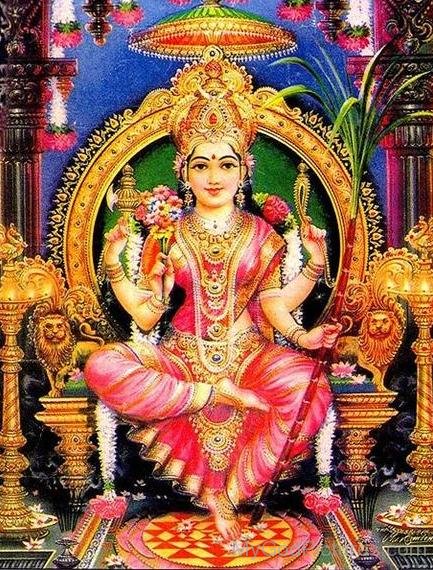
Eight Forms of Lakshmi

The navaratri season is in full swing. The festival respects and worships the female form. Navaratri lasts for nine days and families worship Saraswati, Lakshmi, and Parvati, 3 days each. Families pray to the devine godesses to grant wealth and prosperity. In that context, what wealth are they referring to?

The first thing that comes to mind when we think of wealth is money. By extension we also think of objects that signify wealth – property, vehicles, and clothes. However, is this the full scope of the definition of wealth? The Ashta Lakshmi’s (eight forms of Lakshmi) has the answer.

Lakshmi is the goddess of wealth. She has eight forms.

Adi Lakshmi and Santana Lakshmi

The first two represent our ancestors and our children. These are Adi Lakshmi and Santana Lakshmi. We get our start from the family that we are born into. Adi Lakshmi represents a good family background and good ancestors. We spend a lot of our life raising and caring for our children. Our children also carry on our ancestry. Santana Lakshmi represents our children.

Veera Lakshmi, Vidya Lakshmi, Dhana Lakshmi

The next three act as surrogates for the three main goddesses in Hinduism. These three also capture the three pillars for success – power, knowledge, and financial wealth. Veera Lakshmi represents power, Vidya Lakshmi represents knowledge, and Dhana Lakshmi represents financial earnings.

Dhaanya Lakshmi and Gaja Lakshmi

Two more add flavor to the non-financial types of wealth. Dhaanya Lakshmi represents our gains from agriculture. This can be translated to food for those in cities. Gaja Lakshmi represents our property – land, vehicles, and animals.

Vijaya Lakshmi

Finally, when you have these seven sources of wealth, you also make enemies and get troubled by others. Vijaya Lakshmi helps you defeat your enemies and overcome obstacles.

Vedic astrology provides refers to a number of dhana yogas. The link highlights the popular ones.

Navagraha Gayatri Mantras

Navagraha gayatri mantras

The navagraha gayatri mantras are used to meditate on the nine grahas in vedic astrology. These mantra are easy to memorize because they are similar in structure. The navagraha gayatri mantras have three lines each. The first two lines focus on aspects of the graha (god). The last line indicates the graha.

The first line focuses on an image in the graha’s flag. For example, in the case of Sun we concentrate on the horse in the flag. In the case of Mercury we concentrate on the elephant in the flag. Likewise, in the case of Rahu we concentrate on the snake in the flag.

The second line focuses on what is physically in the graha’s hand or what the graha gives figuratively. For example, in the case of Sun, we concentrate on the rope in his hand. In the case of Venus we concentrate on the bow. In the case of Rahu we concentrate on the lotus.

The last line prays that the graha illuminates our intellect. This helps us realize the ultimate truth.

It is good to chant these nine mantras daily. Repetition of these mantras helps appease the navagrahas.

Table to remember the flag and hand attributes

GrahaFlagHand
Surya (Sun)Ashwa (Horse)Pasa (Rope)
Chandra (Moon)Padma (Lotus)Hema (Golden Color)
Bhouma (Mars)Veera (Hero)Vighna (Removes obstacles)
Budha (Mercury)Gaja (Elephant)Sukha (Pleasures)
Guru (Jupiter)Vrishaba (Bull)Karuni (Grace)
Shukra (Venus)Ashwa (Horse)Dhanur (Bow)
Mandha (Saturn)Kaaka (Crow)Khadga (Sword)
Ketu (Ketu)Ashwa (Horse)Soola (Trident)
Rahu (Rahu)Naaga (Snake)Padma (Lotus)
GrahaNavagraha Gayatri Mantra
navagraha gayatri mantras
Surya (Sun)
Om ashwa-dwajaya vidhmahe
Pasa hastaya dheemahi
Tanno Surya prachodayaat
navagraha gayatri mantras
Chandra (Moon)
Om padma-dwajaya vidhmahe
Hema roopaya dheemahi
Tanno
Chandra prachodayaat
navagraha gayatri mantras
Bhouma (Mars)
Om veera-dwajaya vidhmahe
Vighna hastaya dheemahi
Tanno
Bhouma prachodayaat
Budha (Mercury)
Om gaja-dwajaya vidhmahe
Shuka hastaya dheemahi
Tanno
Budha prachodayaat

Guru (Jupiter)
Om vrishaba-dwajaya vidhmahe
Karuni hastaya dheemahi
Tanno
Guru prachodayaat
Shukra (Venus)
Om ashwa-dwajaya vidhmahe
Dhanur hastaya dheemahi
Tanno
Shukra prachodayaat
Sani (Saturn)
Om kaaka-dwajaya vidhmahe
Khadga hastaya dheemahi
Tanno
Mandha prachodayaat
Ketu
Om ashwa-dwajaya vidhmahe
Soola hastaya dheemahi
Tanno
Ketu prachodayaat
Rahu
Om naaga-dwajaya vidhmahe
Padma hastaya dheemahi
Tanno
Rahu prachodayaat

Sade Sati – Shani (Saturn) transit

sade sati

The most feared transit in vedic astrology is that of Shani (Saturn). Shani gives bad results when it transits houses 1, 2, 4, 8, and 12 houses from the Moon. Shani gives good results when it transits houses 3, 6, and 11 from the Moon. Shani’s transit is neutral in the other four (5, 7, 9, 10) houses. Shani’s transit in each house lasts for two and a half years (2.5 years). Sade Sati is the transit of Saturn through the 12th, 1st, and 2nd houses.

With this information it is clear to see why Sade Sati, or the transit of Shani through the 12th, 1st, and 2nd houses, is dreaded. This is continuous 7.5 years under a bad transitory influence of Shani. It is actually worse when you consider the period Shani transits from the 12th house from your Moon through the 5th house from your Moon. This is a transit of 6 houses, which takes 15 years. Out of these 15 years, four houses are bad (12, 1, 2, and 4) and only one is good (3rd house). The result is 10 bad years out of 15 years (67%). So, the start of Sade-Sati can be viewed as the start of a 15 year period where 10 years are bad.

Combining Dashas and Transits

The good news is that vedic astrology looks at a number of different factors to determine if a period is good or bad. The main factors are

  • Dasha sequence (Maha dasha graha, Antar dasha graha, and Pratyantar dasha graha)
  • Transits of all the grahas and not just Shani. Especially the transits of Shani (Saturn), Guru (Jupiter), and Rahu/Ketu.
  • Position and strength of the grahas in the natal chart. This is the crux of astrology. Vedic astrology considers yoga vichara and bhava vichara, among other things, to evaluate the strength of each graha.

When you incorporate all these factors you get an individualized picture of your destiny. Afterall, transits are the same for all individuals born in a particular Moon sign. Essentially every 12th person has the same transits.

I use the following model to determine the complete effect of all the grahas involved.

  • 30% – maha dasa graha
  • 20% – antar dasa graha
  • 10% – pratyantar dasa graha
  • Saturn transit – 10%
  • Jupiter transit – 10%
  • Rahu/Ketu transit – 10%
  • 10% – transits of the other grahas or transit of the maha dasa graha

Shani’s influence can be as little as 10% or as high as 80% (when you are running Shani-Shani-Shani in your dasha sequence).

Ashtakvarga Method

The Ashtakvarga chart for Shani is a better way to determine the effect of Shani’s transit. This is personalized because it is based on the natal chart. The higher the value the better the effects are – 3 is average. In the example below, transit of Shani in Scorpio (0) would be the worst. Transit of Shani in Virgo and Libra would be good.

Remedies for Sade Sati

Shani punishes us if we are not righteous and law abiding. The practical solution, when one runs a bad Shani transit or dasha, is to be law abiding and righteous. You should also chant the Shani mantra (given below) everyday (12 times). It is good to chant this mantra throughout your life, even if you are not under Shani’s influence.

Nilanjana Samabhasam Ravi Putram Yamagrajam

Chaya Martanda Sambhutam Tam Namami Shanescharam

In conclusion, always remember the wise words of Kabir in one of his most famous dohas.

Dukh Mein Simran Sab Kare, Sukh Mein Kare Na Koye
Jo Sukh Mein Simran Kare, Tau Dukh Kahe Ko Hoye

In anguish everyone prays to Him, in joy does none
To One who prays in happiness, how can sorrow come

Lord Ganesha – the remover of obstacles!

Lord Ganesha

Today is Ganesh Chaturthi and it got me thinking about why we call Lord Ganesha the remover of obstacles. Lord Ganesha’s life is full of examples in which a difficult problem is solved by a seemingly impossible solution. Here are some examples from the life of Lord Ganesha.

Conception of Lord Ganesha

Conception – the story goes that Parvati, Shiva’s wife, wanted some privacy when she was taking a bath. So, she asked Nandi, the Bull, to stand guard. Nandi did a great job of preventing anyone from entering while the goddess was taking bath. However, when Shiva returned, Nandi was in a conundrum. He owed his loyalty, first, to Lord Shiva. How could he prevent his lord from entering his own house? Nandi, being a dutiful follower of Lord Shiva, allowed Shiva to enter while Parvati was still taking her bath. Parvati was irritated, but realized it wasn’t Nandi’s fault. It dawned on her that she did not have anyone who would only listen to her. All her attendants were loyal to Shiva. She created a boy (Ganesha) using her own energy. Ganesha was not born to a man and a woman!

Death of the Boy

Death of the boy – the story continues… Parvati, now has the boy standing guard while she takes a bath. Shiva returns, and the boy stops him from entering the house. Shiva is furious and wages a tough battle with the boy. The boy wins and Shiva is forced to retreat. Shiva then consults with Vishnu and together they attack the boy. While the boy is facing Shiva and fighting, Vishnu attacks from behind (not allowed in ethical warfare) and cuts the boy’s head using his discus. This story shows what it takes to stop someone who is determined in their goals.

Resurrection as Ganesha

Resurrection as Ganesha – Parvati is now furious, especially because unethical behavior was used to kill her son. She lets loose Kali and Durga and the two forms of Shakti cause devastation in the Universe. Shiva and Vishnu, now consult with Brahma and ask for a solution to the problem. Brahma asks the gods to find the head of the first dead creature they see. The gods find a dead baby elephant and bring the head of the elephant. Brahma fixes the head on the boy’s body and gives life to the boy. This is another example of an unnatural solution to an impossible problem.

Image of Ganesha

Image of Ganesha – In a world where people with deformities are laughed at, Ganesha, with a body of a boy and the head of an elephant, is loved and adored. Even, Ganesha’s vehicle, a mouse, shows that the improbable is possible – further illustrating why Ganesha is truly the remover of obstacles.

Shiva Manasa Puja (Mental prayer to lord Shiva)

Puja (prayer) is often cited as the first step in one’s spiritual journey. Adi Sankara understood in the 8th century AD that people’s life was becoming very hectic. They did not have the time to perform the rituals associated with puja in Hinduism. Therefore, he composed “Shiva Manasa Puja” to give everyone a way to mentally perform puja for Lord Shiva.  It is one of my favorite Adi Sankara compositions and I mentally chant it every morning.

Verse 1: Abhishekam, Alangaram and Deeparadhanai

Ratnaih Kalpitam-Aasanam Hima-Jalaih Snaanam Ca Divya-Ambaram
Naanaa-Ratna-Vibhuussitam Mrga-Madaa-Moda-Angkitam Candanam
Jaatii-Campaka-Bilva-Patra-Racitam Pushpam Ca Dhuupam Tathaa
Diipam Deva Dayaa-Nidhe Pashupate Hrt-Kalpitam Grhyataam

Visualize seating Lord Shiva on a throne of gems and bathing him with waters from the Himalayas. Then apply sandal paste and dress him up in divine clothes studded with gems. Once dressed, offer flowers in the form of jasmine and magnolia and offer Shiva’s favorite Bilva leaves. Then follow this by lighting a lamp and burning fragrant incense sticks.

Verse 2: Prasadam and Naivedyam

Shiva_Manasa_Puja_Verse_2

Sauvarnne Nava-Ratna-Khanndda-Racite Paatre Ghrtam Paayasam
Bhakssyam Pan.ca-Vidham Payo-Dadhi-Yutam Rambhaa-Phalam Paanakam
Shaakaanaam-Ayutam Jalam Rucikaram Karpuura-Khannddo[a-U]jjvalam
Taambuulam Manasaa Mayaa Viracitam Bhaktyaa Prabho Sviikuru

Visualize preparing a luxurious meal for Lord Shiva starting with pyasam served in a bowl studded with gems. Then follow that with a five-course meal incorporating Lord Shiva’s favorite ingredients milk, curd, and bananas. After that, offer a drink made of the sweetest fruits and vegetables. All of which, you offer on a grand plate and light camphor to stimulate the appetite of the Lord.

Verse 3: Bhakthi and Namaskaram

Shiva_Manasa_Puja_Verse_3

Chatram Caamarayor-Yugam Vyajanakam Ca-Adarshakam Nirmalam
Viinnaa-Bheri-Mrdangga-Kaahala-Kalaa Giitam Ca Nrtyam Tathaa
Saassttaanggam Prannatih Stutir-Bahu-Vidhaa Hye[i-E]tat-Samastam Mayaa
Sangkalpena Samarpitam Tava Vibho Bhaktya Prabho Swekaro

Visualize preparing his bed under a cool canopy and fanning him using a hand fan. Provide dance and music in the form of Veena and drums to further relax the Lord. You finally sing prayers to the Lord and prostrate before the Lord asking him to accept your mental prayers.

Verse 4: Internalize the concept of god

Shiva_Manasa_Puja_Verse_4

Aatmaa Tvam Girijaa Matih Sahacaraah Praannaah Shariiram Grham
Puujaa Te Vissayo[a-U]pabhoga-Racanaa Nidraa Samaadhi-Sthitih
San.caarah Padayoh Pradakssinna-Vidhih Stotraanni Sarvaa Giro
Yad-Yat-Karma Karomi Tat-Tad-Akhilam Shambho Tava-Araadhanam

Visualize your entire body as a temple for Lord Shiva, with your soul being Lord Shiva, your intellect being Goddess Parvati, and your breadth being the attendants of Lord Shiva. Then dedicate all your actions to Lord Shiva by considering every worldly interaction a prayer to the Lord, by thinking of sleep as being in a state of deep meditation, by dedicating every step taken toward the act of going around the Lord, by thinking of every word uttered as a hymn in the praise of the Lord, and by dedicating every task as a task of worship to the Lord.

Verse 5: Surrender and Forgiveness

Shiva_Manasa_Puja_Verse_5

Kara-Caranna-Krtam Vaak-Kaaya-Jam Karma-Jam Vaa
Shravanna-Nayana-Jam Vaa Maanasam Va-Aparaadham
Vihitam-Avihitam Vaa Sarvam-Etat-Kssamasva
Jaya Jaya Karunna-Abdhe Shrii-Mahaadeva Shambho

Finally, you humbly ask for forgiveness for any sins you committed. These could be by your hands and feet or your words. The sins could also be witnessed by your eyes or heard by your ears. Finally, the sins could be committed by your mind. In conclusion, you salute the greatness of Lord Shiva.

Simple Hindu Prayers

It is good to carve out some time every day for some simple Hindu prayers. The idea is to find ways to reduce the amount of time the mind spends on mundane thoughts. Prayers are mentioned as a good first step towards self realization in the Upadesa Saram by Sri. Ramana Maharishi. He goes on to say that japas and meditation are even better; but prayers are a good first step.

In this post I have selected nine simple Hindu prayers that everyone can say every day. The first three prayers are for Shiva, Vishnu, and Brahma; the trinity in Hinduism. The next three are for their consorts Parvati, Lakshmi, and Saraswati. These are followed by a prayer for Ganesha and Hanuman and finally capped off with a Shanti Mantra.

simple hindu prayers
Shiva
Om Tryambakam Yajamahe
Sugandhim Pushtivardhanam
Urvarukamiva Bandhanan
Mrityor Mukshiya Maamritat
 
simple hindu prayers
Vishnu
Shuklambaradaram Vishnum
Shashivarnam Chaturbhujam
Prasanna vadanam Dhyaayeth
Sarva vighno pashantaye
Brahma
Brahma
Gurur Brahma Gurur Vishnu
Gurur Devo Maheshwara
Gurur Sakshat Parabrahma
Tasmai Shree Guruvey Namaha
simple hindu prayers
Parvati
Sarva Mangala Mangalye
Shive Sarvartha Sadhike
Sharanye Tryambake Gauri
Narayani Namostute
Lakshmi
Lakshmi
Karaagre Vasate Lakssmih
Karamadhye Sarasvati
Karamuule Tu Govindah
Prabhaate Karadarshanam
Saraswati
Saraswati
Saraswati Namastubhyam
Varade Kaama Roopini
Vidyaa Rambham Karishyaami
siddhir Bhavatu Me Sadaa
Ganesha
Ganesha
Ekadantam Mahaakaayam
Taptakaajnchana sannibham
LambodaraM VishaalaaxaM
Vande Ham GaNanaayakam
Hanuman
Hanuman
Buddhir Balam Yasho Dhairyam
Nir Bhayatvam Arogata
Ajatyam Vak Patutvam Cha
Hanumat Smaranat Bhavet
om
Peace
Om Saha Nau-Avatu Saha Nau Bhunaktu
Saha Viiryam Karavaavahai
Tejasvi Nau-Adhiitam-Astu Maa Vidvissaavahai
Om Shaantih Shaantih Shaantih

Animals and Birds in Hinduism

Animals and birds play a prominent role in Hinduism. For example, every god uses an animal as their mode of transportation. The vehicle and the god form an interdependence. The animal helps the god perform his or her duties more effectively. For example, the bull is Shiva’s “vahana”. The bull represents strength and therefore adds to Shiva’s strength. Vishnu is the protector. The eagle, his vehicle, helps him oversee the world with a sharp eye.

In addition, some animals and birds have special statuses in Hinduism. The elephant is worshiped as Ganesha. Similarly, the monkey is worshiped as Hanuman. Finally, snakes are worshiped as Nagas. Also, in the realm of birds, the eagle is worshiped as Garuda.

Animals revered as gods

animals and birds in hinduism

Elephant (Ganesha)
animals and birds in hinduism

Monkey (Hanuman)
animals and birds in hinduism

Snakes (Naga Deva)

Animals as mounts of gods

animals and birds in hinduism

Bull (Shiva – Destroyer)
Garuda

Eagle (Vishnu – Protector)
Swan

Swan (Brahma – Creator)
Lion

Lion (Parvati – Power)
animals and birds in hinduism

Owl (Lakshmi – Wealth)
Saraswati

Swan (Saraswati – Intelligence)
animals and birds in hinduism

Mouse (Ganesha – Remover of Obstacles)
Peacock

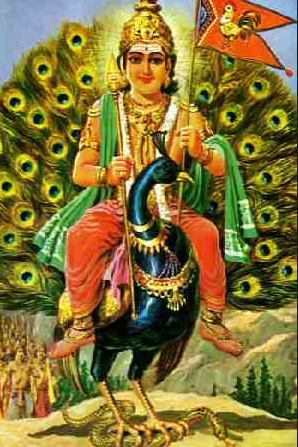
Peacock (Muruga – War)
Tiger

Tiger (Ayyapan)
Sun

Horse (Sun)
animals and birds in hinduism

Antelope (Moon)
animals and birds in hinduism

Lion (Mercury)
Shukran

Horse (Venus)
Mars

Ram (Mars)
animals and birds in hinduism

Elephant (Jupiter)
Crow

Crow (Saturn)
Lion_Rahu

Lion (Rahu)
Ketu

Eagle (Ketu)
elephant

Elephant (Indra – King of Gods)
Ram

Ram (Agni – Fire)
animals and birds in hinduism

Sea Dragon (Varuna – Water)
Antelope_Vayu

Antelope (Vayu – Wind)
Yama

Buffalo (Yama – Death)
parrot

Parrot (Kama – Love)

Even “Man” is depicted as a “vahana”. “Man” carries Kubera, the god of wealth!

animals and birds in hinduism
Man (Kubera – Money)